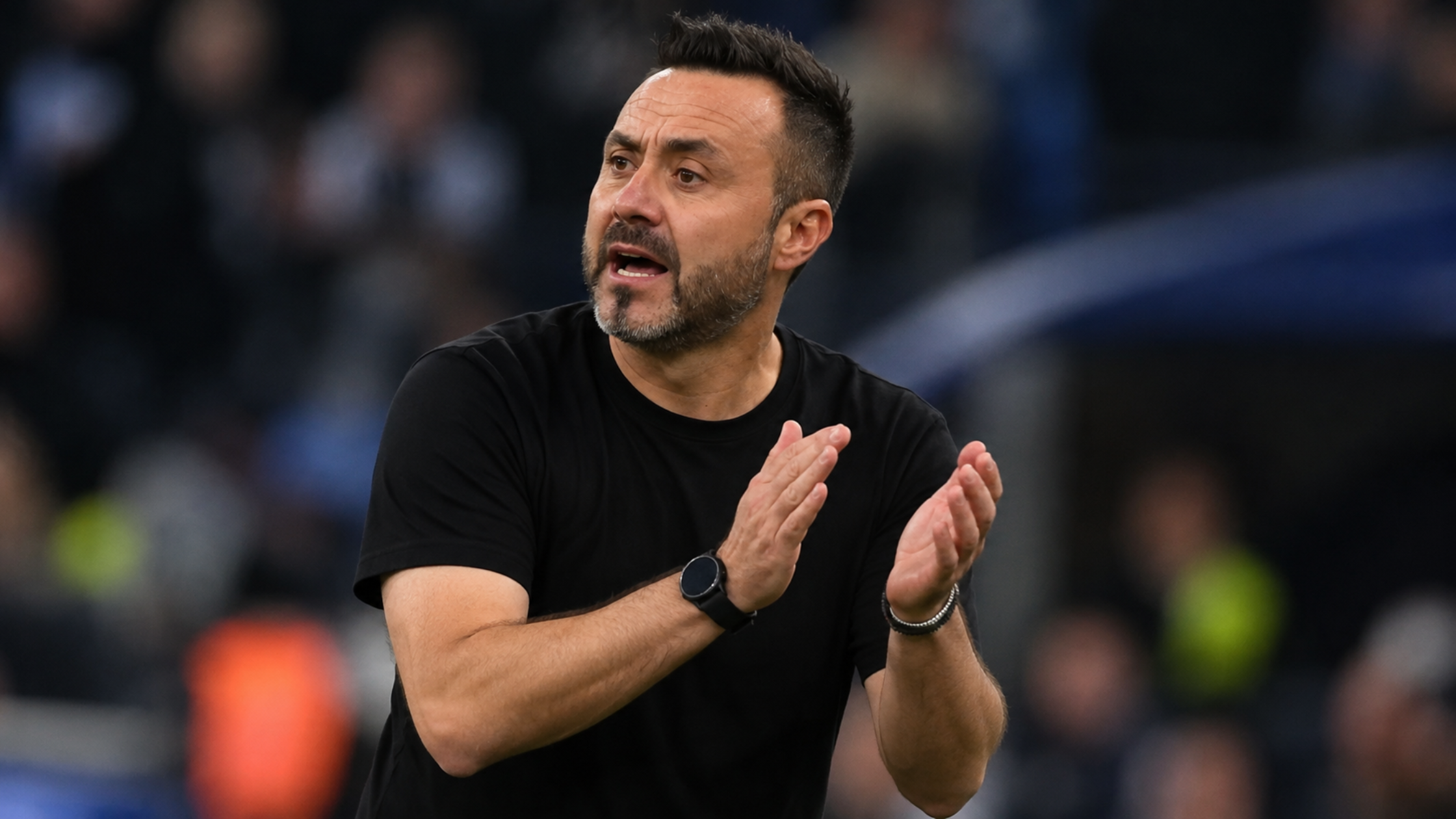
Tottenham Hotspur may have transformed their squad during the summer, but Roberto De Zerbi has warned that assembling an expensive collection of players is very different from building a functioning team.
Spurs entered the new Premier League season carrying renewed expectations after an aggressive recruitment drive that brought Sandro Tonali, Mateus Fernandes, Jan Paul van Hecke, Andy Robertson, Marcos Senesi and Martin Dubravka to north London before further additions arrived later in the window. Tosin Adarabioyo, Sávio, Omar Marmoush and Mykhailo Mudryk were among those subsequently added to De Zerbi’s squad.
The investment, however, has yet to produce the desired effect.
Tottenham opened the campaign with a 3-0 defeat at Brentford before losing 2-0 to Newcastle. A goalless draw at Nottingham Forest finally brought their first point of the season, but three matches have passed without a Spurs goal. Against Forest, they also failed to register a shot on target.
It was after that draw that De Zerbi offered perhaps his clearest explanation yet for why the club’s summer spending has not immediately translated into performances.
“We bought very, very good players but you can’t just build the team with the names like in Football Manager,” he said.
It was a striking comparison, but also a fairly simple message: football is not a squad-building simulation. Reputation, transfer fees and individual ability do not automatically create chemistry, understanding or collective belief.
For Tottenham, that process appears to be only beginning.
De Zerbi’s Football Manager remark also followed another comment that attracted even greater attention.
After Tottenham’s defeat to Newcastle, the Italian identified mentality as perhaps the biggest challenge of his rebuild.
“The biggest problem, the biggest challenge, the biggest target is to find the right mentality,” De Zerbi said, before adding: “Unfortunately you can’t buy the mentality in the transfer market.”
Taken in isolation, the comment could easily sound like criticism of the players Tottenham had just spent heavily to recruit.
That interpretation is understandable. The club deliberately targeted players with significant Premier League and international experience. Robertson arrived having won major honours with Liverpool, Tonali was established at Newcastle and with Italy, while Van Hecke, Senesi and others were recruited partly because Tottenham believed they could immediately raise the level of the squad.
There is, however, an important distinction in what De Zerbi appears to be saying.
His argument is not necessarily that the new signings lack mentality individually. Rather, he has repeatedly spoken about mentality as something that must be developed collectively. A new group can contain strong personalities and talented footballers while still lacking the habits, trust and resilience required to function as a successful team.
Indeed, Tottenham themselves described several summer recruits in precisely those terms. When Dubravka signed, De Zerbi praised his “strong mentality”, while the club highlighted Robertson’s leadership and character upon his arrival.
That makes De Zerbi’s message more complicated than simply blaming the transfer window.
The players may have the qualities Tottenham wanted. The question is whether De Zerbi can mould them into something greater than the sum of their parts.
That is also where the risk begins.
Managers frequently challenge their squads publicly, particularly when attempting to change the culture of an underperforming club. But comments about mentality carry additional weight when results are poor.
Tottenham are coming off consecutive 17th-place finishes, and De Zerbi inherited a team whose confidence had already been badly damaged before keeping the club in the Premier League last season. The latest rebuild was supposed to represent the beginning of a new era.
Three league matches are nowhere near enough to judge whether that project will succeed. They are, however, enough for frustration to return.
Reaction among supporters has reflected that tension. Some Spurs fans discussing De Zerbi’s Football Manager comments have argued that he is simply stating an obvious truth and that a heavily changed squad needs time. Others have questioned why rival sides have managed to integrate new players more quickly.
That divide could become important.
If De Zerbi’s comments are understood inside the dressing room as a demand for greater collective standards, they may ultimately help him establish the culture he wants. If players begin to interpret repeated references to mentality as public criticism, the dynamic can change rapidly.
There is currently no solid evidence that De Zerbi has “lost the dressing room”, and suggesting otherwise after three league games would be premature. But managing that perception is now part of his job.
The Italian has already shown that he is willing to speak openly about Tottenham’s weaknesses. That directness can be a strength, but it also leaves little room for ambiguity when pressure increases.
For all Tottenham’s spending, De Zerbi’s central point remains difficult to dispute. Tonali, Fernandes, Robertson, Marmoush, Sávio, Mudryk and the rest may give Spurs a considerably stronger collection of individual players.
But names do not create a team.
And if this new era is to become more than another expensive false start, Tottenham must now prove that the mentality De Zerbi is searching for can be built before poor results begin to trump the project itself.